Valencia in August is not for everyone.
And that is precisely what makes it so good.
While half of Spain crowds into the same typical destinations every summer, Valencia remains the favourite city of people who actually know where to go: guaranteed sunshine, beaches ten minutes from the city centre, architecture that genuinely leaves you speechless, and a food scene that goes far beyond paella (although the paella is excellent too).
August in Valencia means heat, late-night terraces, long evenings and that feeling that time somehow moves more slowly than usual.
This guide is designed to help you organise your trip properly, without stress and without wasting time on things that simply are not worth it.
Malvarrosa Beach and the Coast
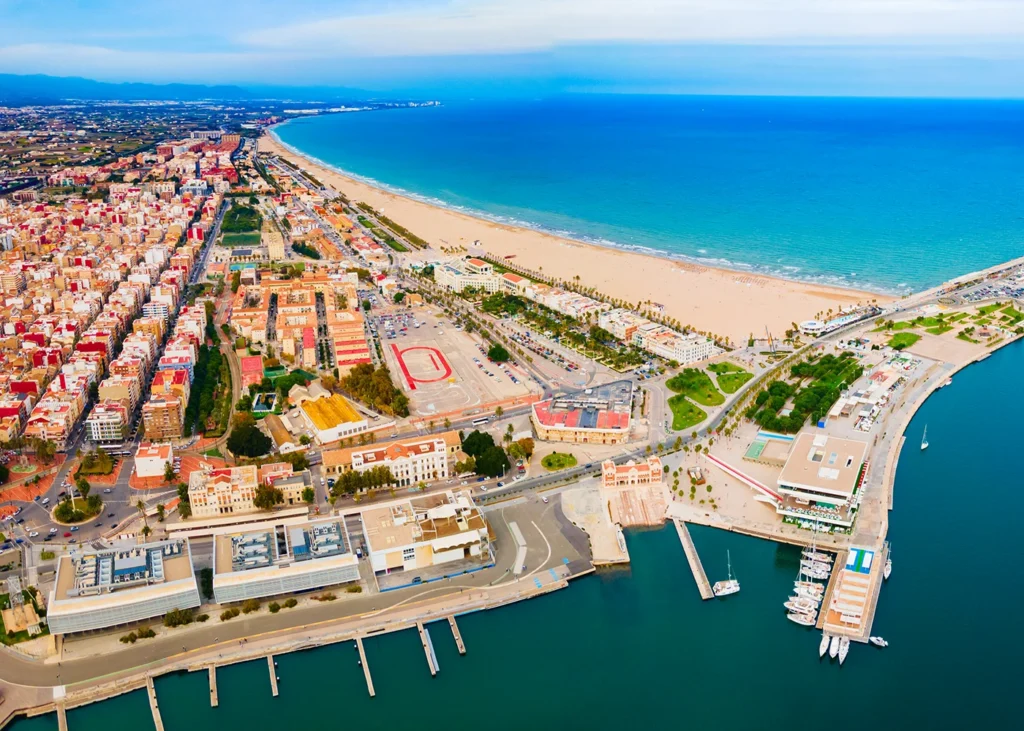
If there is one thing that sets Valencia apart from other coastal cities, it is that its beaches are genuinely urban.
La Malvarrosa is the best known, with 1.8 kilometres of golden sand, a lively seafront promenade and restaurants directly facing the beach.
It is not a perfectly polished postcard beach, nor does it try to be: it is a beach with character, history and traces of the old fishing culture of El Cabanyal that you can still feel if you pay attention.
In August, the trick is to arrive before 10am or later in the evening.
At midday the heat becomes seriously intense, and the beach fills up quickly.
If you are looking for somewhere quieter, the beaches of Pinedo or El Saler (inside the Albufera Natural Park) are excellent alternatives: finer sand, fewer people and a natural setting that surprises many visitors.
To reach Malvarrosa from the city centre, you can take bus lines 19 or 31, or simply use tram line 4 from Metro Marítim-Serrería.
The promenade around the area is perfect for cycling.
Valencia has an extensive network of cycle lanes connecting the city centre to the coast without needing to deal with traffic, and the public bike-sharing service Valenbisi has stations spread all along the route.
The City of Arts and Sciences
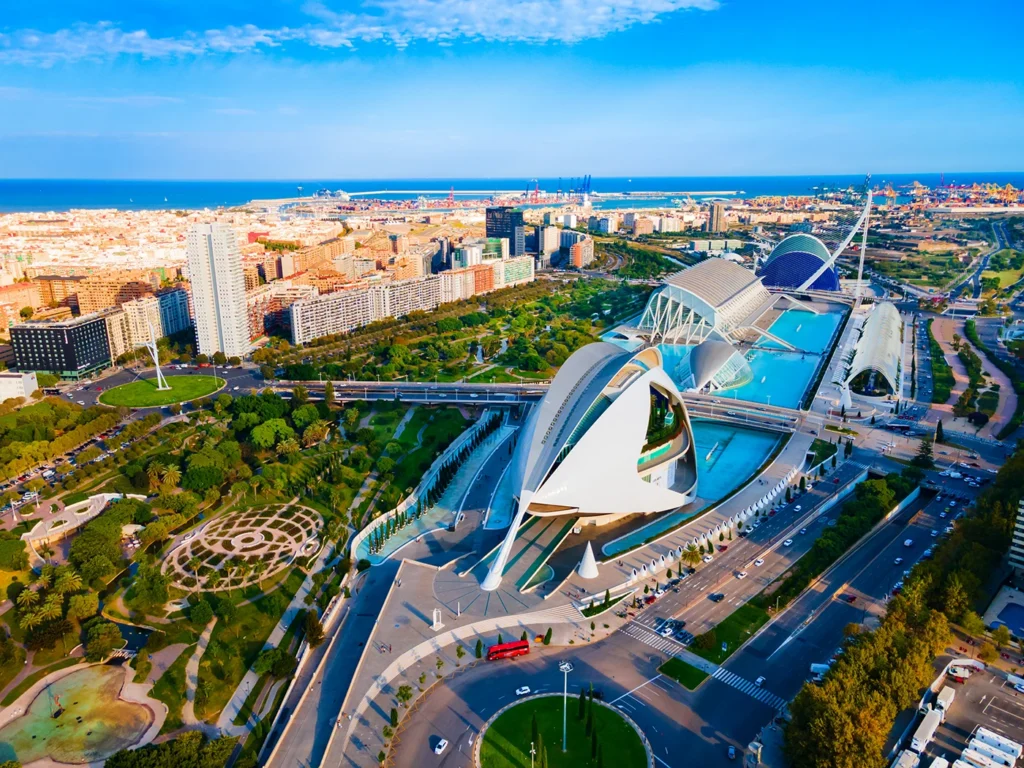
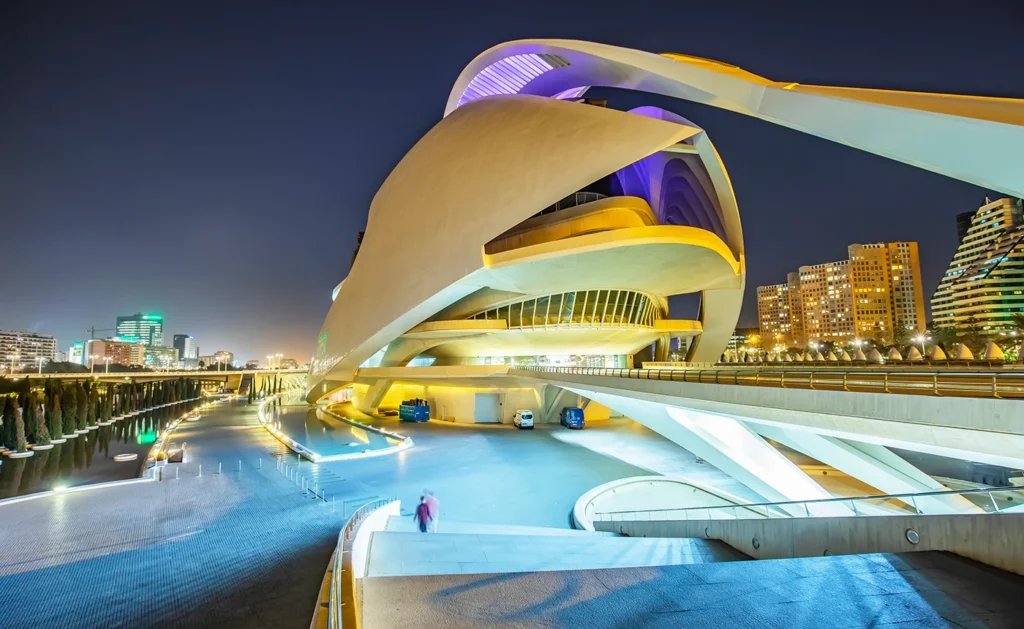
There are very few places in Spain that create the same visual impact as the City of Arts and Sciences the first time you see it.
The complex designed by Santiago Calatrava is one of those places that photographs simply cannot fully explain: you need to be there, walk between the buildings, watch the summer light reflecting on the water and understand why Valencia decided to invest so heavily in contemporary architecture.
In August, the smartest plan is to visit the Oceanogràfic in the morning, when the interior is air-conditioned and crowds are smaller.
The Oceanogràfic is the largest aquarium in Europe, featuring ecosystems from all over the planet and an experience that works for every type of traveller.
If you are travelling with children, it is essential.
If you are not travelling with children, it is still essential.
The Príncipe Felipe Science Museum has interactive exhibitions worth spending a couple of hours exploring, and the Hemisfèric (an IMAX cinema and planetarium) runs screenings throughout the summer.
One detail you will appreciate: the entire area has free gardens and walking spaces.
You can easily spend an entire afternoon wandering around the outside without paying anything while enjoying one of the most photogenic places in the city.
The sunsets here are simply incredible.
The Central Market and the Historic Centre
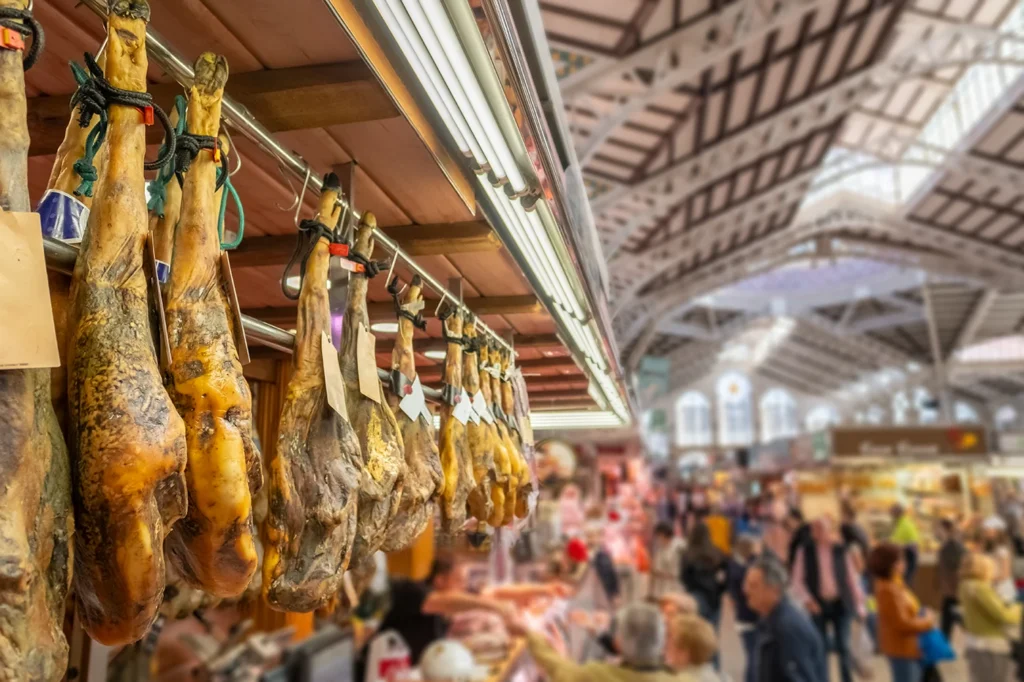
Valencia’s Central Market is one of the largest covered markets in Europe, built in Modernist style at the beginning of the 20th century.
Every morning in August it opens with seasonal products, fruit, vegetables, spices, cured meats and fresh fish from the Mediterranean.
If you can only visit one place during your trip to Valencia, make it this one.
Around it lies the historic centre, filled with shaded squares and fountains.
Plaza de la Virgen, the Cathedral with its famous Miguelete tower, the Silk Exchange (declared a UNESCO World Heritage Site), and the Carmen district with its mix of street art and medieval architecture.
August has one major advantage here: many Valencians are away on holiday, so the city centre feels calmer and easier to enjoy than at other times of year.
One route people particularly enjoy is starting at the Central Market early in the morning, stopping for coffee with horchata and fartons at one of the market cafés, then wandering through the streets of El Carmen towards the Serranos Towers.
These towers were once part of the medieval city walls and offer an excellent perspective on how well Valencia’s historic heritage has been preserved.
If you want proper context while exploring, free walking tours leave every morning from Plaza de la Reina and are a very good way to begin your first day.
The Albufera
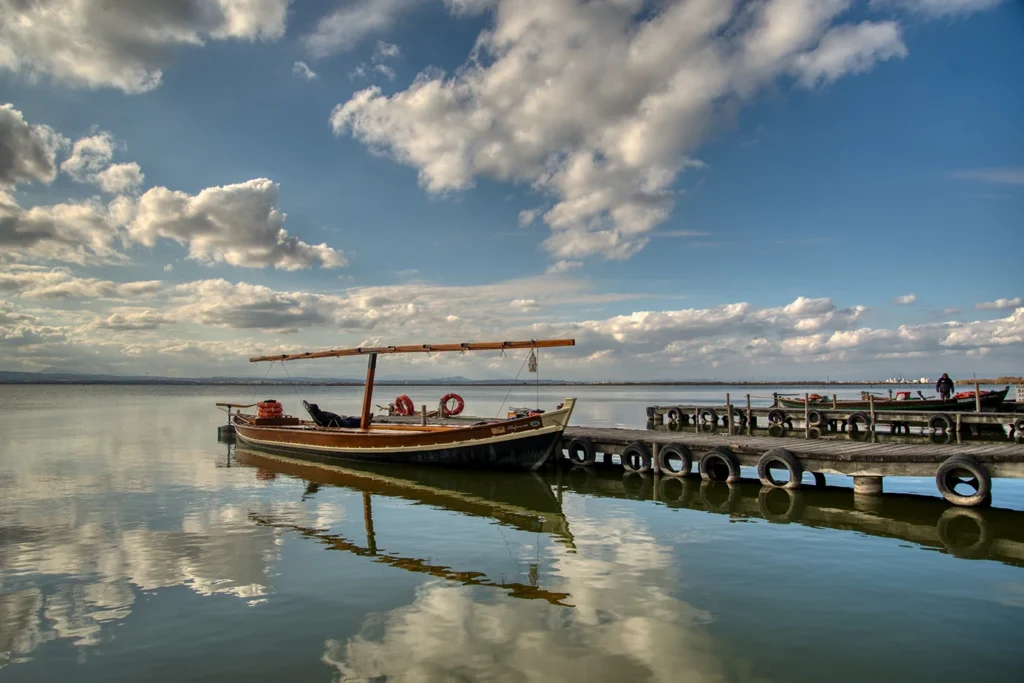
Roughly 20 kilometres south of Valencia city centre lies the Albufera Natural Park, one of those places most tourists completely overlook during their first trip to the city.
Big mistake.
The Albufera is a freshwater coastal lagoon surrounded by rice fields, deeply connected to one of the most iconic dishes in Spanish cuisine: authentic Valencian paella was born here, in the traditional farmhouses beside the lagoon, using rice grown in the surrounding fields.
In August, the sunset boat trip across the lagoon is one of Valencia’s most sought-after experiences.
The sun reflecting across the water, the rice fields at their peak season and the silence broken only by water birds create an atmosphere that feels impossible to find so close to a major city.
The boats leave from the harbour in El Palmar, the park’s most famous village, and the journeys last between 30 and 45 minutes.
Eating in El Palmar is also one of the best culinary decisions you can make during your visit to Valencia.
The village restaurants have spent decades specialising in rice dishes: classic Valencian paella, arròs a banda, arròs amb fesols i naps…
If you want to try paella in its original setting, this is as authentic as it gets.
Book in advance, especially in August: the good restaurants fill up quickly.
Summer Nights in Valencia
Valencia in August offers something very few cities can claim: a top-level cultural and nightlife scene built around warm summer evenings outdoors.
The Filmoteca d’Estiu is perhaps the most special plan of all.
Every August night, films in their original language with subtitles are shown in the gardens of the Palau de la Música from 10:30pm onwards.
Cinema under the stars, surrounded by gardens, with the perfect temperature for being outdoors.
There really is not much more you could ask for.
The Ruzafa district is one of the most interesting parts of the city: terraces, bars with excellent music, fusion restaurants inspired by cuisines from all over the world and an atmosphere that blends lifelong locals with people who moved here from elsewhere and never left.
It is not the most touristy neighbourhood in Valencia, which is exactly what makes it feel so authentic.
For dinner, drinks afterwards or both, Ruzafa is the safest choice in August.
The terraces along Paseo de la Pechina beside the Turia Gardens are another classic part of Valencian summer life.
A cold beer or an Agua de Valencia (the city’s most famous cocktail, made with cava, orange juice and vodka) while the sun goes down and the temperature finally becomes comfortable is one of those moments that makes people return to Valencia again and again.
And they do return.
Staying in an Apartment in Valencia City Centre
Choosing the right place to stay in Valencia during August can make the difference between a good trip and a truly excellent one.
An apartment in the city centre gives you something no hotel really can: genuine freedom.
A fully equipped kitchen for preparing whatever you bought at the Central Market, spacious rooms where you can organise your luggage properly, and the possibility of stepping outside and being just five minutes away from any point in the historic centre.
Staying centrally in August has obvious advantages.
The Central Market, Cathedral, Carmen district and Turia Gardens are all within walking distance.
The bus and tram lines connecting to the beach are only a few minutes away on foot.
And when the city fills with tourists, you are already exactly where you need to be — without relying on transfers or wasting time travelling around.
Whether you are travelling as a couple, with friends or as a family, an apartment in Valencia city centre offers the best balance between comfort, price and location.
No hotel schedules, no breakfast buffet you never really wanted, no sharing lifts with twenty strangers.
Your own space, your own rhythm, and the entire city within easy reach.
At TravelHabitat, we manage apartments in Valencia city centre designed for travellers who genuinely want to enjoy the city without sacrificing comfort.
If you already have dates in mind for August, get in touch and we will help you find the apartment that best suits your trip.